Mrs. Black
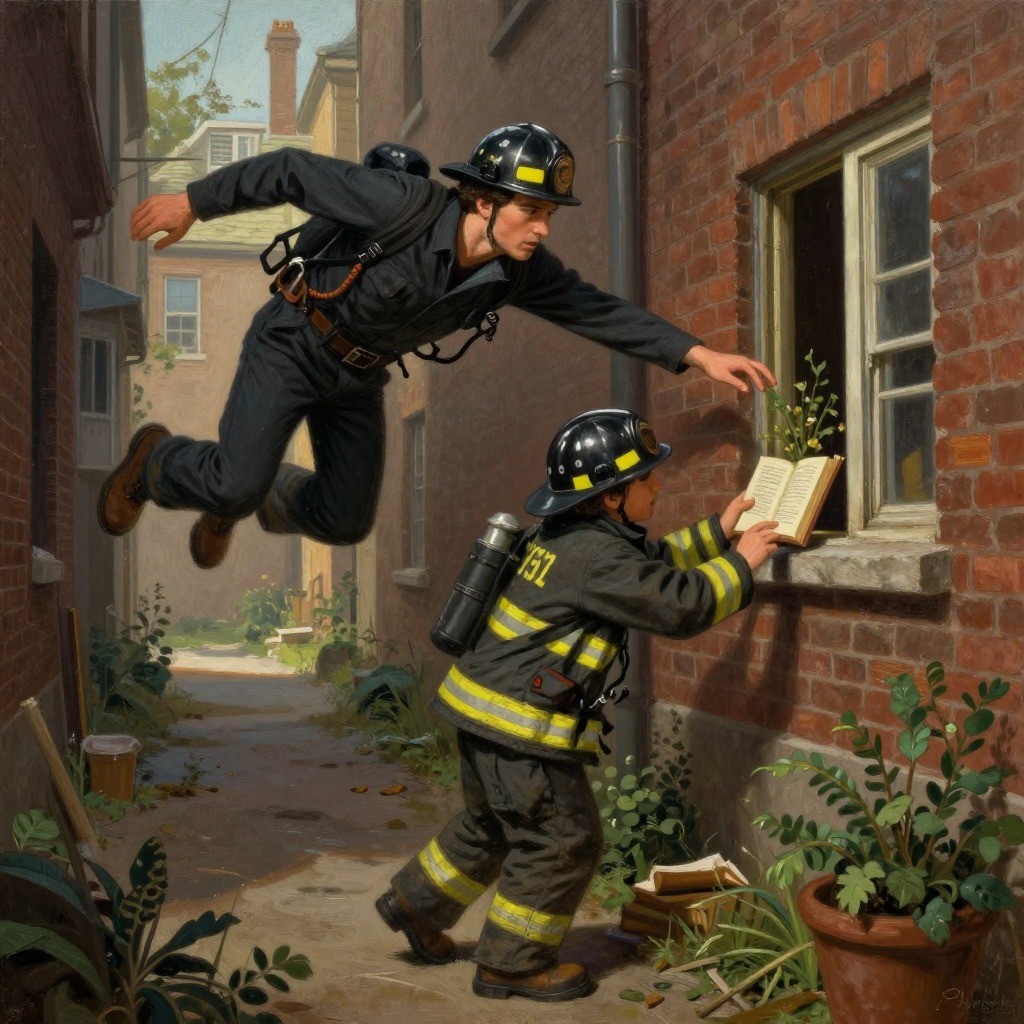
Mrs. Black is the neighbor of the old woman who chooses to burn with her books rather than surrender them to the firemen. She is the one who signs the complaint that brings Montag, Captain Beatty, and the other firemen to the house at 11 No. Elm Street. When Stoneman holds out the telephone alarm card with the complaint signed in duplicate on the back, the old woman reads the initials "E. B." and identifies Mrs. Black as her neighbor. This act of betrayal sets in motion the pivotal event that deeply shakes Montag: the old woman's self-immolation. Mrs. Black thus represents the ordinary citizen who collaborates with the system of censorship, the anonymous informant whose signature can condemn a life.
Role in Montag's Transformation
Mrs. Black's betrayal is a direct catalyst for Montag's growing disillusionment. The old woman's willingness to die rather than live without her books forces Montag to confront the value of what he has been burning. He later reflects on her face and her quiet defiance, and the memory of her sacrifice fuels his own rebellion. When Montag later decides to plant books in firemen's homes to sow suspicion and undermine the system, he chooses Mrs. Black's house as his first target. He creeps through the night-moistened scent of daffodils and roses, enters her home through the back door, and hides the books in her kitchen. As he does so, he thinks, "This isn't good, but your husband did it to others and never asked and never wondered and never worried. And now since you're a fireman's wife, it's your house and your turn, for all the houses your husband burned and the people he hurt without thinking." He then phones in an alarm from a lonely phone booth, knowing the Salamanders will come to burn Mr. Black's house while he is away at work, leaving Mrs. Black to stand shivering in the morning air as her roof collapses.
Symbolic Significance
Mrs. Black embodies the complicity of the ordinary citizen in the oppressive regime. She is not a fireman or a government official, but a neighbor who uses the system to settle a personal score or to enforce conformity. Her act of reporting the old woman is a mundane betrayal, the kind that sustains the surveillance state. In turn, Montag's act of planting books in her home is a form of poetic justice, turning her own weapon against her. She becomes a pawn in the larger struggle between knowledge and ignorance, a reminder that in a society where everyone is watched, everyone is also a potential informant. Her fate—her house burned by the very institution her husband serves—mirrors the old woman's fate, but without the dignity of choice. Mrs. Black is left to face the consequences of a system she helped uphold, a silent figure whose name is known only through the initials on a complaint form.